Section 1: Introduction – The Rise of Digital Skills in Nigeria
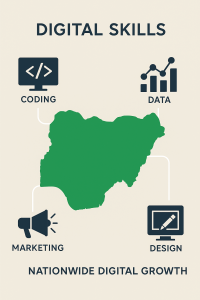
In recent years, Digital Skills in Nigeria have evolved from being a luxury to an absolute necessity for career growth and survival in the modern workforce. Across industries such as finance, education, agriculture, media, and technology, employers are now actively searching for candidates who possess strong digital competencies. The rapid adoption of the internet, smartphones, and cloud-based tools in Nigeria has completely transformed how people work, learn, and earn, creating endless opportunities for those who are digitally skilled.
Today, mastering the right digital skills can literally skyrocket your career and open doors to remote work, freelancing, and entrepreneurship. According to a 2024 report by the International Finance Corporation, over 230 million jobs in Sub-Saharan Africa will require digital skills by 2030, and Nigeria is expected to account for a significant portion of that demand. This means that those who invest in learning these skills now will have a competitive edge in the job market.
The Nigerian tech ecosystem has also grown remarkably. Cities like Lagos, Abuja, and Port Harcourt are emerging as digital innovation hubs where young professionals are building careers in tech, digital marketing, data science, and product design. Startups such as Flutterwave, Paystack, and PiggyVest have demonstrated how digital innovation can create jobs and redefine industries. What used to be limited to computer science graduates is now open to anyone willing to learn and adapt.
For instance, a young Nigerian with a background in business administration can transition into a career as a social media manager or data analyst after completing a few months of digital training. Similarly, artisans and small business owners are using digital tools to grow their customer base, manage finances, and promote their services online. The truth is, digital literacy is no longer optional; it is the currency of the modern economy.
The Nigerian government and private organizations have also recognized the importance of promoting Digital Skills in Nigeria. Initiatives like the Google Digital Skills for Africa program, Microsoft Leap, and ALX Africa’s Tech Training have trained millions of Nigerians in fields ranging from software development to digital marketing. These programs provide practical, job-ready skills that align with current market needs.
However, despite these positive developments, a digital divide still exists — especially between urban and rural communities. Limited internet access, inadequate infrastructure, and lack of awareness remain significant challenges. Yet, the rise of low-cost smartphones, internet expansion, and online learning platforms has started to close this gap. As more Nigerians embrace online education and digital tools, the potential for widespread economic growth becomes even greater.
In essence, learning in-demand digital skills in Nigeria is not just about staying relevant — it is about future-proofing your career. Whether you’re a recent graduate, an entrepreneur, or a professional seeking better opportunities, developing digital expertise will help you stay ahead in a rapidly changing economy.

Section 2: The Top 7 In-Demand Digital Skills in Nigeria Today
The digital revolution sweeping through Nigeria has opened up diverse career opportunities for skilled professionals. Whether you’re seeking full-time employment, freelance gigs, or remote roles abroad, having the right *Digital Skills in Nigeria* can dramatically boost your earning potential. Below are the seven most in-demand digital talents currently driving the Nigerian job market and how they can skyrocket your career.
1. Digital Marketing
Digital marketing is one of the most sought-after skills in Nigeria today. Businesses of all sizes — from small fashion stores to fintech startups — rely on digital marketing experts to promote their brands, attract customers, and increase revenue. This field covers content marketing, social media management, search engine optimization (SEO), pay-per-click advertising (PPC), and email marketing. With over 33 million active social media users in Nigeria, professionals who can create online visibility and generate conversions are in high demand.
Digital marketers can work as freelancers, consultants, or in-house specialists for agencies and companies. Many Nigerians have built thriving businesses by mastering platforms such as Google Ads, Facebook Business Manager, and LinkedIn Campaign Manager. Courses from Google Digital Skills and hubspot provide free certifications that boost employability and credibility.
2. Web and App Development
Web and mobile app development are critical digital skills driving Nigeria’s tech industry. Developers design and build websites, applications, and digital solutions that help businesses operate efficiently. From fintech apps like Opay to e-commerce platforms like Jumia, skilled developers are behind the technology that powers everyday life.
Proficiency in programming languages such as HTML, CSS, JavaScript, Python, and PHP can open doors to lucrative roles both locally and internationally. As Nigeria pushes toward digital transformation, web developers can secure high-paying remote jobs or build their own tech startups. Many Nigerian developers learn from platforms such as Freecode Camp and Code Academy, gaining the practical experience needed to excel in global markets.
3. Data Analysis and Data Science
In the digital economy, data is the new oil. Companies now depend on data-driven decisions to grow and optimize performance. Data analysts and scientists collect, interpret, and visualize data to guide business strategies. In Nigeria, industries like banking, telecommunications, and logistics rely heavily on these experts to improve customer satisfaction and boost efficiency.
Learning data skills like Excel, SQL, Power BI, R, or Python analytics can position you as a valuable asset to employers. The Nigerian government and private sectors are actively seeking professionals who can interpret data insights for smarter policymaking and market forecasting. Platforms like Coursera and Datacamp offer specialized data science programs suited for beginners and professionals alike.
4. UI/UX Design (User Interface and User Experience)
As digital products increase, so does the demand for user-friendly designs. UI/UX designers create visually appealing interfaces and seamless user experiences for websites and apps. This skill combines creativity, psychology, and technology — perfect for Nigerians with an eye for design and problem-solving.
UI/UX design is also among the highest-paying remote-friendly jobs worldwide. Nigerian designers who master tools like Figma, Adobe XD, and Sketch can collaborate with global clients and startups. ALX Africa, Coursera, and Dribbble provide training resources that can help new designers develop world-class portfolios.
5. Cybersecurity
As Nigeria’s digital economy expands, so do cyber threats. Cybersecurity professionals are responsible for protecting systems, networks, and data from hackers and fraudsters. With cybercrime incidents rising across Africa, experts in this field are becoming indispensable to both government and private organizations.
Cybersecurity analysts who understand encryption, ethical hacking, and risk management can find jobs in financial institutions, tech companies, and even the defense sector. Certifications such as CompTIA Security+, Certified Ethical Hacker (CEH), and CISSP give Nigerian professionals global recognition. Free courses are available at Cybrary. andb Edx.
6. Cloud Computing
Cloud computing enables businesses to store and process data over the internet rather than relying on physical servers. It is transforming how Nigerian companies manage information, host applications, and scale their operations. Professionals skilled in cloud platforms like Amazon Web Services (AWS), Microsoft Azure, or Google Cloud are among the most employable in the world.
Nigeria’s growing tech startups and remote-first companies now rely heavily on cloud infrastructure, creating steady demand for administrators, engineers, and architects. The cloud skill set also aligns perfectly with global remote work trends, allowing Nigerian experts to work for international firms from home.
7. Digital Content Creation and Video Editing
The rise of TikTok, YouTube, and Instagram in Nigeria has created massive opportunities for digital content creators and video editors. Businesses and influencers depend on engaging visual content to capture audiences online. If you can script, film, or edit compelling videos, your skill is marketable both locally and internationally.
Mastering editing tools like Adobe Premiere Pro, CapCut, or DaVinci Resolve allows creators to produce professional-quality content that drives engagement. Beyond entertainment, industries such as education and e-commerce now rely on video marketing for growth. Nigerian creators who consistently produce quality digital content are already earning through ads, sponsorships, and brand deals.
These seven Digital Skills in Nigeria represent the foundation of a successful modern career. As more employers shift toward online operations, these skills guarantee employability, flexibility, and higher income potential. Nigerians who start building these competencies today are positioning themselves for global relevance in the years ahead.
Section 3: How to Learn These Digital Skills Effectively
Learning Digital Skills in Nigeria is more accessible today than ever before. Whether you are a student, job seeker, or entrepreneur, the internet offers countless opportunities to gain valuable digital knowledge at your own pace. The key to success lies in choosing the right learning path, staying consistent, and applying what you learn through hands-on practice.
The first step to mastering any digital skill is to identify your career interest and learning style. For example, if you love communication and creativity, digital marketing or content creation might be ideal. If you are analytical and enjoy solving problems, data analysis or cybersecurity could be your best fit. By aligning your interests with your goals, you can focus on skills that match your strengths and long-term aspirations.
Nigerians can start learning digital skills through a combination of online courses, mentorship programs, bootcamps, and internships. Some of the best global platforms include (https://www.coursera.org), (https://www.udemy.com), and (https://www.linkedin.com/learning), all offering affordable and often free courses taught by industry experts. These platforms provide certificates that strengthen your credibility in the job market.
Locally, organizations such as ALX Africa, Google Digital Skills for Africa, Tech4Dev, and Ingressive for Good offer specialized training programs designed to help Nigerians develop employable digital expertise. These programs often provide hands-on projects, networking opportunities, and job placement assistance after completion. Participating in these initiatives not only builds your skill set but also connects you with mentors and peers in the digital ecosystem.
Consistency and practice are essential for mastery. Watching tutorials or completing online lessons is not enough; you need to apply what you learn. For example, after studying digital marketing, create sample campaigns for a local business or personal project. If you are learning web development, build small websites to showcase your coding skills. These projects serve as proof of competence when applying for jobs or freelance gigs.
Networking also plays a crucial role in your learning journey. Joining online communities and forums such as (https://www.reddit.com/r/NigeriaTech) or Nigerian tech groups on Facebook and Telegram exposes you to opportunities, challenges, and new trends in the digital space. Many professionals have found job offers, partnerships, and mentors simply by staying active in these online spaces.
In addition, certification and specialization increase your market value. Once you have a solid foundation in a skill, consider pursuing advanced certifications that set you apart. For instance, a beginner digital marketer can specialize in SEO, while a data analyst can advance into machine learning or data visualization. Global certifications like Google Analytics, AWS Certified Cloud Practitioner, or Adobe Creative Cloud Expert can significantly enhance your employability in Nigeria’s competitive job market.
Practical experience is equally important. Internships, volunteering, or freelancing provide real-world exposure that helps you understand how digital skills are applied professionally. Many Nigerian startups offer remote internships that allow you to learn while contributing to live projects.
Finally, stay updated. The digital world evolves quickly, and yesterday’s most valuable skill can become outdated tomorrow. Keep learning through YouTube tutorials, industry newsletters, and tech blogs such as (https://techpoint.africa) or (https://techcabal.com). By staying informed, you ensure your skills remain relevant and marketable in the long run.
In conclusion, learning Digital Skills in Nigeria effectively requires a mix of curiosity, discipline, and consistent practice. Whether you are learning through free online courses, mentorships, or professional bootcamps, the key is to take action. The more you practice, the more confident and employable you become in a rapidly digitizing world.
Section 4: Real-Life Success Stories from Nigerians Who Leveraged Digital Skills
The impact of Digital Skills in Nigeria goes far beyond theory. Across the country, countless individuals have transformed their lives by learning and applying digital talents. From freelancers to tech founders, these real-life success stories highlight how ordinary Nigerians are achieving extraordinary results through digital empowerment.
One of the most inspiring examples is Hanu Fejiro Agbodje, the founder of Patricia, a thriving cryptocurrency trading platform. Hanu started as a self-taught digital entrepreneur with a passion for technology. By learning digital marketing, website design, and blockchain basics, he built Patricia into one of Nigeria’s most recognized fintech brands. His story reflects how determination, skill acquisition, and digital literacy can turn a simple idea into a multimillion-dollar business.
Similarly, Odunayo Eweniyi, the co-founder of PiggyVest, demonstrates the transformative power of digital innovation. Armed with a background in computer engineering, she applied her knowledge of web development and digital business strategy to create a platform that helps millions of Nigerians save and invest money effortlessly. Her success has inspired many young women in Nigeria to embrace digital skills and venture into tech entrepreneurship.
Another remarkable story is that of Fisayo Fosudo, a Nigerian tech YouTuber and digital storyteller. With expertise in video editing, content creation, and digital branding, Fisayo turned his passion for technology into a full-time career. Today, he collaborates with global brands and earns substantial income from his YouTube channel. His journey shows how mastering digital skills like video editing and storytelling can lead to global recognition and financial independence.
In the freelancing space, Peace Itimi, a digital marketing strategist and content creator, has become a symbol of digital excellence. She began by taking free online courses from Google Digital Skills and applying her knowledge to local businesses. Over time, she built a strong portfolio and began working with international clients. Today, she also trains thousands of Nigerians through workshops and webinars, helping others tap into the power of digital careers.
There’s also Iyinoluwa Aboyeji, co-founder of Andela and Flutterwave, who embodies the future of Nigeria’s tech ecosystem. Through his vision and digital expertise, he helped connect Nigerian developers with global companies and created thousands of remote jobs. His work has proven that investing in digital talent development can strengthen Nigeria’s global competitiveness and reduce unemployment.
These stories reflect a powerful truth — digital skills are not limited to tech professionals. From designers to traders and artisans, everyone can benefit. For instance, small business owners across Lagos and Abuja now use Instagram, WhatsApp Business, and Facebook Ads to attract customers. A fashion designer can now reach international clients, while a caterer can take online orders and grow her customer base using simple digital tools.
Platforms like Upwork and Fiverr have also empowered many Nigerian freelancers to work remotely for clients abroad. People who once struggled to find local jobs are now earning steady incomes in dollars simply by mastering skills like writing, web design, or virtual assistance.
These examples prove that anyone can succeed with the right mindset and access to digital knowledge. What unites all these success stories is the courage to start, the willingness to learn, and the consistency to keep improving. The digital world rewards creativity, problem-solving, and innovation — qualities that many Nigerians naturally possess.
As Nigeria continues to advance digitally, more individuals will rise through technology-driven opportunities. The next global influencer, software developer, or data scientist could be learning from a small apartment in Ibadan, Enugu, or Kaduna. The only limitation is refusing to learn.
FAQ Section: Frequently Asked Questions on Digital Skills in Nigeria
1. What are digital skills in Nigeria?
Digital skills in Nigeria refer to the technical and creative abilities that help individuals use technology effectively for work, communication, and innovation. They include areas such as digital marketing, web development, data analysis, UI/UX design, and cybersecurity. These skills are now essential for both employment and entrepreneurship in today’s economy.
2. Why are digital skills important for Nigerians today?
Digital skills are vital because the world is moving toward a technology-driven economy. In Nigeria, companies now prefer employees who can operate digital tools, manage online systems, and communicate effectively across digital platforms. Having these skills increases your employability, income potential, and ability to work remotely or start an online business.
3. How can I start learning digital skills in Nigeria?
You can start learning digital skills online through platforms like (https://www.coursera.org), (https://www.udemy.com), and (https://learndigital.withgoogle.com/digitalskills). Many Nigerian-based initiatives such as ALX Africa, Ingressive for Good, and Tech4Dev also offer free or subsidized programs. Start by choosing one skill, study consistently, and apply your knowledge to real-life projects.
4. Do I need a degree to learn digital skills?
No, a university degree is not required to learn or master digital skills in Nigeria. Many successful tech professionals and freelancers started with self-paced online courses or mentorships. What matters most is your dedication, practice, and ability to deliver results. Employers and clients care more about your skills and portfolio than your academic background.
5. Which digital skill pays the most in Nigeria?
Some of the highest-paying digital skills in Nigeria include software development, data science, cybersecurity, and cloud computing. However, your income depends on experience, specialization, and the market you serve. Remote and freelance professionals working for global clients often earn in dollars, making digital careers even more rewarding.
6. Can I get a remote job after learning digital skills in Nigeria?
Absolutely. Many Nigerians are now working remotely for companies in the United States, Canada, and Europe after gaining relevant digital skills. Websites like (https://www.upwork.com), (https://www.remoteok.com), and (https://www.linkedin.com/jobs) list remote opportunities that accept Nigerian applicants. Having a strong online profile and portfolio increases your chances of being hired internationally.
7. What is the best digital skill for beginners in Nigeria?
For beginners, digital marketing, graphic design, and web development are great starting points. They are easy to learn, in high demand, and can be practiced with minimal resources. Once you gain confidence, you can advance into more technical areas like data science or cybersecurity.
8. How long does it take to learn a digital skill?
Learning timelines depend on your consistency and the complexity of the skill. On average, it can take three to six months of consistent learning and practice to become proficient in one digital skill. The key is to focus on building practical projects instead of only watching tutorials.
9. Are there government programs supporting digital skill development in Nigeria?
Yes. The Nigerian government has partnered with private organizations to promote digital literacy through initiatives such as the National Digital Economy Policy and Strategy (NDEPS) and the NDPR Digital Academy. These programs are designed to train youth, entrepreneurs, and public servants in essential digital competencies.
10. What is the future of digital skills in Nigeria?
The future of digital skills in Nigeria is extremely promising. As more industries adopt technology, digital talent will become the backbone of the economy. The rise of artificial intelligence, fintech, e-commerce, and remote work means skilled Nigerians will have limitless opportunities both locally and globally.