
1. Introduction – Why Soft Skills are the New Power Tools for Nigerian FinTech Professionals
Essential Soft Skills for Nigerian FinTech Professionals are no longer nice to have; they are the fuel that drives innovation, customer trust, and team performance in today’s digital finance space. The Nigerian fintech industry is one of the fastest-growing in Africa, attracting billions in investment and expanding into payments, lending, blockchain, savings, and insurance. With this rapid growth comes competition, and employers no longer hire based on technical knowledge alone. What separates top-performing fintech talent from the rest is adaptability, critical thinking, leadership ability, strong communication, and emotional intelligence. These are the soft skills that determine how well a professional can work under pressure, manage clients, solve complex problems, and lead digital transformation.

From Lagos to Abuja and Port Harcourt, fintech companies are scaling fast. New startups are launching every month, banks are adopting financial technology, and global companies are entering the Nigerian market. This means the workplace is changing, customers are becoming smarter, and new regulations challenge how digital finance solutions are delivered. Professionals who do not have strong soft skills struggle to survive. Those who master them become valuable, promoted, respected, and trusted.
Soft skills help fintech experts in areas like fraud prevention, customer relations, user experience, risk analysis, and project management. For example, a product manager who communicates clearly will build better apps that customers understand. A compliance expert with emotional intelligence will handle customer complaints professionally. A software developer with critical thinking skills will solve problems faster instead of writing code that keeps breaking. Even if an applicant has certificates, programming skills, and fintech training, hiring managers still check how well the person works with people, learns new things, and handles challenges.
In this guide, you will discover 7 Essential Soft Skills Every Nigerian Fintech Professional Must Master to stand out in the industry. You will learn how these skills increase your earning power, help you secure promotions, and position you as a leader in the competitive fintech space. This article also shows practical ways to build and showcase these skills in your CV, interviews, and workplace. Whether you are a beginner or a professional already working in fintech, these soft skills will give you an advantage in Nigeria’s fast-changing digital finance sector.
7 Essential Soft Skills Every Nigerian Fintech Professional Must Master for Career Growth
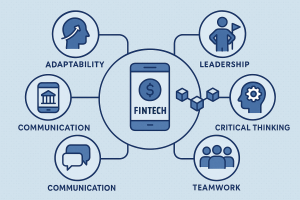
Essential Soft Skills for Nigerian Fintech Professionals are becoming the main requirement for hiring managers because fintech is a high-pressure and innovation-driven industry. Technology changes fast, customer expectations increase daily, and competition is rising. A professional who has these 7 power skills can work smarter, solve problems faster, and build trust in the fintech ecosystem.
1. Adaptability
Nigeria’s fintech industry changes quickly. New government policies, CBN regulations, market disruptions, customer behavior, and technological updates happen often. Professionals must adapt fast without losing focus. A product manager might launch a feature today and discover customers need something different next week. A software developer might have to switch from one programming language to another to solve a problem. Adaptability helps you remain relevant and confident even when challenges show up. Employers prefer flexible people who learn fast, try new tools, and respond positively to change.
2. Communication Skills
In fintech, communication goes beyond speaking English fluently. It means explaining complex financial or technical ideas in simple language that customers and team members understand. Many Nigerian users still struggle with digital finance platforms. If customer support cannot communicate clearly, the company will lose trust and users will quit. Even developers need communication skills to share ideas with product teams, UI designers, or compliance officers. Good communication increases productivity, reduces confusion, and improves customer experience.
3. Critical Thinking and Problem Solving
Fintech is built on solving problems in payments, loans, savings, and financial inclusion. Professionals who think critically can analyze challenges, compare solutions, remove risks, and make smart decisions. When an app fails during peak transactions, a critical thinker finds the real cause instead of guessing. When customers abandon a product, a data analyst uses logical thinking to find what went wrong. Nigerian fintech companies value employees who do not break under pressure but approach problems calmly and professionally.
4. Leadership and Teamwork
Fintech companies run on teamwork. Developers, product designers, marketers, compliance officers, and data analysts must work together to launch a product. Leadership is not only for managers. A junior staff with initiative can lead a project, motivate a team, or suggest improvements. Professionals who show leadership are trusted with bigger responsibilities including promotions, salary raises, and supervisory roles. When teamwork and leadership combine, companies move faster, make fewer mistakes, and achieve business goals easily.
5. Emotional Intelligence
Nigerian customers expect empathy, respect, fast response, and emotional connection when using financial apps. A fintech employee with emotional intelligence manages customer complaints calmly instead of sounding rude or frustrated. In the workplace, emotional intelligence helps professionals avoid conflict, stay productive, and maintain a positive environment. Companies prefer workers who control their emotions, handle stress, and treat people professionally. Emotional intelligence builds trust, and trust makes fintech companies stable.
6. Time Management
Fintech deadlines are tight. Product updates, security audits, customer support, and marketing campaigns must be delivered quickly. A professional who manages time well completes tasks faster without sacrificing quality. Companies lose money when employees waste time or delay work. Learning how to plan tasks, avoid distractions, and prioritize important activities makes you more valuable in the workplace. Time management improves productivity, reduces stress, and shows employers that you are reliable.
7. Customer-Centric Thinking
Every fintech product exists because of the user. If customers are confused, frustrated, or ignored, the company will fail. A customer-centric professional tries to understand what users want and how to improve their experience. This skill is valuable in product design, customer support, marketing, UI/UX, and even coding. Fintech companies that focus on customer satisfaction are the ones that gain more market trust. Professionals who keep users in mind make better decisions that lead to growth and loyalty.
These 7 Essential Soft Skills for Nigerian Fintech Professionals separate ordinary workers from outstanding leaders. They increase job opportunities, attract higher salaries, and help workers stay relevant as the industry evolves. To strengthen your career, you must practice these soft skills daily and learn how to showcase them to employers and clients.
How to Build, Practice, and Showcase These Soft Skills in the Nigerian Fintech Space

Essential Soft Skills for Nigerian Fintech Professionals become more powerful when you know how to develop them and use them in real work situations. Many job seekers say they have soft skills on their CV, but employers do not see any real evidence. The secret is to practice these skills consistently and show them through your results, not just your words. Nigerian fintech companies want people who can prove adaptability, leadership, communication, and critical thinking with real examples.
One practical way to build adaptability is by staying updated with industry changes. Join fintech communities, attend webinars, and read research reports. You can follow trusted fintech publications and even take short online courses. Visit our full guide on profitable business ideas in Nigeria to explore digital opportunities you can learn from and adapt to new trends. When you expose yourself to new tools, technologies, and ideas, your mindset becomes flexible. If your team shifts to a new software or your project direction changes, you will respond confidently instead of panicking.
Communication skills grow stronger with intentional practice. Many fintech professionals improve by taking online communication courses or writing clear reports, emails, and product documentation. Customer service workers can record calls, listen to themselves, and learn how to sound calmer and clearer. A data analyst can polish communication by presenting reports in simple language that business teams understand. You can practice public speaking by joining tech or fintech events in Lagos, Abuja, or online. When you speak confidently and write clearly, employers notice immediately.
Critical thinking and problem solving develop when you stop guessing and start analyzing. Nigerian fintech platforms experience bugs, cyber risks, customer drop-offs, and regulatory issues. Professionals who ask the right questions find smart solutions quickly. The best way to show critical thinking is by identifying a challenge and explaining how you solved it with logic. If you redesigned a feature because customers were confused, that is critical thinking. If you reduced failed transactions by analyzing user data, that is critical thinking. Document your results and mention them in interviews or your LinkedIn profile.
Leadership and teamwork grow when you volunteer for responsibility. You do not need a management title to be a leader. You can coordinate a small project, mentor a junior colleague, or suggest a better workflow. Nigerian fintech companies like to promote people who solve problems without waiting to be told. If you support your team, help others learn new tools, or step up during difficult situations, people see you as a leader. Real leadership is shown through action, not job title.
Emotional intelligence requires self-control, respect, and empathy. Nigerian fintech users may complain, panic during failed transactions, or ask repeated questions. A professional with emotional intelligence remains calm, friendly, and helpful. This skill can be practiced daily. Instead of reacting with anger or frustration, slow down and respond professionally. When teammates make mistakes, help them instead of blaming them. Emotional intelligence creates trust, and trust builds strong relationships.
Time management can be practiced with simple habits. Set daily goals, break tasks into smaller actions, and remove all unnecessary distractions. Using calendars, digital reminders, or project management tools makes your work faster and organized. Fintech employers prefer people who submit tasks before deadline, attend meetings on time, and reduce avoidable delays. Time management shows that you are reliable and professional.
Customer-centric thinking grows when you intentionally focus on user experience. Nigerian fintech users love apps that are fast, simple, and transparent. If you work in product development, ask real users what confuses them. If you work in customer support, listen carefully and give solutions instead of excuses. When you think like a customer, you build better products and better relationships.
After building these Essential Soft Skills for Nigerian Fintech Professionals, the next step is showcasing them in a way that employers notice. You can highlight them in your CV by using real achievements instead of empty claims. Instead of writing “good communication skills,” you can write that you handled 400 customer complaints monthly with 90 percent positive feedback. Instead of writing “leadership,” you can say you led a small team to deliver a feature update that increased user retention. Results speak louder than words.
You can also showcase soft skills on LinkedIn by sharing fintech insights, discussing project experiences, and connecting with industry leaders. Many Nigerian employers check LinkedIn profiles before calling candidates for interviews. Posting your achievements or publishing short articles positions you as knowledgeable and confident. Your portfolio, GitHub projects, customer reviews, or product case studies also show proof of competence.
Soft skills are long-term career investments. As fintech grows across Africa, international companies are already hiring Nigerians for remote roles. Professionals who combine technical ability with strong soft skills will always stand out. They earn higher salaries, get promotions faster, and remain valuable even when the industry changes.
Conclusion
Essential Soft Skills for Nigerian Fintech Professionals are becoming just as powerful as technical ability. The highest-paid experts in the Nigerian fintech space are not only those who can write code or understand financial systems, but those who communicate clearly, adapt fast, solve complex problems, lead teams, manage time, and stay customer-focused. These skills make professionals more valuable, more reliable, and more trusted in a highly competitive market. Whether you are a developer, data analyst, growth marketer, product manager, customer support officer, or compliance expert, soft skills position you for success in Nigeria’s fast-growing digital economy.
To grow your career, practice these skills every day. Join fintech communities, attend training, learn from mentors, volunteer for leadership roles, and document your achievements. Show employers what you can do, not just what you say. Nigeria’s fintech industry is expanding across Africa and connecting to global platforms. This means more opportunities for smart, confident, and skilled professionals. When you combine technical knowledge with strong soft skills, you become unstoppable in the fintech world.
Frequently Asked Questions (FAQ)
1. Why are soft skills important for Nigerian fintech professionals?
Soft skills help professionals communicate better, solve problems, handle customer complaints with respect, adapt to change, and manage responsibilities. Fintech companies prefer workers who are confident, reliable, and emotionally intelligent.
2. Can soft skills increase salary and job opportunities in fintech?
Yes. Many fintech companies promote or hire candidates with strong leadership, communication, and problem-solving abilities. Soft skills make you more valuable, and employers are willing to pay for talent that can deliver results.
3. How can I build soft skills if I am just starting a fintech career?
Join online fintech communities, attend webinars, take short courses, volunteer for projects, practice communication, and learn to work with teams. You can also showcase your skills on LinkedIn by sharing insights and project results.
4. What soft skill helps when dealing with angry customers?
Emotional intelligence. It helps you stay calm, professional, and respectful even when customers are frustrated. It also improves customer loyalty and trust.
5. Can I showcase soft skills in my CV?
Yes. Instead of listing soft skills as words, show them with achievements. For example, mention how you solved a problem, led a team, improved user experience, or managed a project successfully.
Don’t stop here—explore our next guide on Personal Development to gain even more clarity and value.